Automation in analytics sounds like a marketer’s dream: press a button and get the answers. But honestly, it doesn’t work that way, at least not in real business, where every decision has consequences.
AI helps make sense of data, but it does not make decisions for you. And surprisingly, that’s an advantage, not a drawback.
How it works in practice
Limited automation is when algorithms handle routine tasks and large datasets that are difficult for humans to process manually:
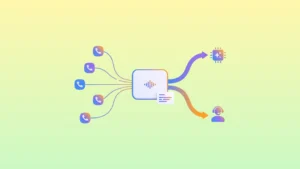
- Collect metrics from multiple sources into one place
- Detect sudden changes and trends
- Generate preliminary insights
Interpretation—why something happened, what it means for the business, and what actions to take—remains the marketer’s job. Algorithms don’t know your goals, history, or market context.
Where AI is really useful
Automation works well when:
- There’s too much data to handle manually
- A quick overview of the situation is needed
- Data arrives regularly and in a consistent format
Automation struggles when:
- Data from different systems doesn’t align
- You lack understanding of what actually happened in the business
- You expect AI to propose a strategy
AI helps you spot patterns in the data, but decisions are made by humans who understand the business context and the real situation.
What matters for high-quality analytics
AI doesn’t need gigabytes of data—it needs the right data.
In marketing, this often means behavioral signals: how people respond to messages, where they pause, what they ignore.
For messaging apps like Viber, analytics can reveal:
- Real audience activity
- Which messages are opened and which are ignored
- Where potential clients drop off in the journey
Example: In lead generation scenarios via Viber, a client receives a message, visits the website, and submits a request. When all this data is in one system, analytics shows not just isolated metrics per channel, but the complete customer journey.
How marketers can avoid getting lost in automation
To get real value from AI analytics, follow simple rules:
- Don’t confuse analysis with decision-making
AI shows patterns. You decide what to do with them. - Always check the context
An algorithm may detect a drop in conversions. Only you know if prices changed or a rebranding happened at the same time. - Look at trends, not isolated data points
One day is random. A week shows a trend. A month signals action.
In NovaTalks, analytics works like a data partner: it collects data from all channels, identifies trends, and you interpret them in the context of your business.
Analytics and Customer Service: Where They Meet
For example, in customer service, the system sees numbers: average response time 5 minutes, satisfaction 4.2/5, peak request times at 10:00 and 15:00. But only the team understands the context: why these hours, what’s wrong with certain request types, and how it relates to product changes.
Is your team ready for AI analytics? Self-check
- Data is collected systematically
- You know which metrics matter for your business
- Analytics is used regularly, not just once a quarter
- Someone on the team is responsible for interpreting numbers
- Automation doesn’t replace strategy discussions
If most of these apply, you’re ready to get the most out of AI analytics. If not, start by organizing your data—the rest will follow.
The reality of AI analytics: no illusions
AI doesn’t give ready-made solutions. It shows where something changed: churn increased, conversion dropped, activity shifted. What to do with that is your decision.
Three things AI cannot do:
- Handle chaos — if data is unstructured, automation won’t help
- Know the context — numbers show “what,” but not “why”
- Guarantee accuracy without human verification — algorithms make mistakes, humans must catch them
Ignoring these limitations turns automation into a source of errors, not an assistant.
Common Questions
Do I need technical skills for automated analytics?
Programming isn’t required, but understanding data logic is critical: reading reports, spotting anomalies, asking the right questions. Without this, even the most advanced AI report can be misinterpreted, leading to wrong decisions.
Why analyze messenger data if I already have web analytics?
Messengers show real behavior: how people react to messages, where they pause in dialogues, what questions they actually ask. It complements—not replaces—traditional metrics. Web analytics tracks website actions; messengers track live communication.
Can I rely entirely on AI conclusions?
AI generates hypotheses from data, but humans must confirm or reject them. Context always outweighs raw numbers.
How to know if analytics is really helping the business?
Simple indicators: decisions are made faster, team discussions are based on concrete data, everyone understands metrics the same way. If previously debates lasted hours due to differing interpretations, and now the team works with facts—analytics works.
Is this approach effective for small businesses?
Yes. Automated analytics gives small businesses structure without unnecessary complexity or huge budgets. You get organized data and basic insights without building bulky processes.
What’s the difference between partial and full automation?
- Partial automation: AI processes data, detects trends, and generates preliminary insights; strategic decisions are made by you.
- Full automation: The system decides actions on its own. In marketing, this is risky—algorithms don’t know your market specifics, company history, or current business goals.
Conclusion
Limited automated analytics is a conscious choice between speed and understanding.
It allows you to work with large datasets without losing control over what the data means for your business. AI helps you see signals. You make the decisions.
In NovaTalks, automation acts as a reliable assistant: it structures data, highlights trends, and points out what’s important so you can make faster, more accurate decisions. You gain clarity without data overload and control without losing detail.