A manager picks up the phone, dials a client’s number and suddenly doesn’t know how to start. Or a client asks an unexpected question, the employee gets confused, hesitates, and in the end loses the deal. To prevent this, companies create sales scripts — structured conversation scenarios that help guide the dialogue confidently from the very beginning to closing the deal.
A conversation script is the foundation of confident communication
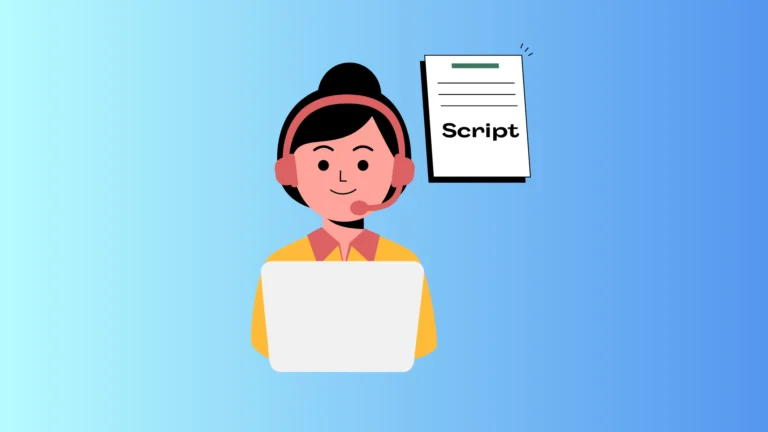
A conversation script with a client is a ready-made plan that outlines what exactly a manager should say at each stage of communication. It’s important to understand: this is not a text to be read mechanically, but a flexible template with ready-made phrases, questions, and reaction options for different client responses.
Sales scripts are a comprehensive tool that includes both the main line of dialogue and answers to objections, methods for identifying needs, and key questions. It is a sort of coordinate system that shows the manager where they are in the sales process and what step to take next.
Why sales scripts are support, not limitations
Many leaders fear that scripts will turn managers into robots who mindlessly read text from a page. But that’s not the case. A well-designed script doesn’t restrict — it provides confidence and frees mental resources for what matters most: listening to the client and finding the solution that truly fits their needs.
What benefits do scripts provide?
Faster reactions. A manager doesn’t have to think each time about how to answer typical questions. Ready-made formulations save time and allow faster processing of inquiries compared to improvisation.
Stable quality. Regardless of an employee’s experience or mood on any given day, the client always receives the same high level of service. Newcomers adapt faster, and experienced specialists avoid random mistakes caused by fatigue or stress.
Fewer mistakes. A script reminds managers about important details: to ask for contact information, clarify the budget, record agreements. In complex B2B sales, where one mistake can cost millions, this is critical.
Easy scaling. With ready-made scripts, hiring new people becomes much simpler. A new manager can work effectively within a week instead of spending months learning from their own mistakes.
Where scripts work best
Not every situation requires a detailed script, but there are areas where it’s indispensable:
Cold calls. A script helps overcome the first-contact barrier, capture attention in just a few seconds, and arrange the next step. Without a well-thought-out scenario, cold call conversion rarely exceeds 2–3%. With a strong script plus proper preparation and qualified leads, conversion can increase several times — up to 10–18%.
Typical inquiries. If the sales department answers the same questions daily about pricing, timelines, or conditions, a script significantly speeds up the process and ensures accuracy.
Handling objections. “Too expensive,” “We’ll think about it,” “Competitors are cheaper” — everyone hears these phrases. Prepared answers prevent confusion and help turn objections into opportunities to continue the conversation.
Follow-up contacts. A follow-up script helps gently remind the client about you without sounding intrusive and smoothly guide them toward a decision.
How to create a script that truly works
An effective script is the result of analyzing your audience, product, and entire sales process. Here are the key components:
A clear goal of the conversation. First define: what do you want to achieve? Schedule a meeting, close a deal, collect an email? The structure of the dialogue depends on this.
A strong start. You have 10–15 seconds to engage the client. Introduce yourself, briefly explain why you’re calling, and show the value of the conversation.
Open-ended questions about needs. Don’t jump straight into product pitching. Ask the client about their tasks, problems, and goals. This allows you to tailor the presentation to their situation.
Benefit-based presentation. The client cares not about “what it is,” but “what it does for me.” Speak in terms of benefits: not “fast delivery,” but “you’ll receive it tomorrow and can start working immediately.”
Prepared responses to objections. Analyze the most common client objections and prepare convincing arguments. The key is not to dismiss the objection, but to show understanding of the client’s concern.
A clear next step. Don’t end with “We’ll call you back.” Offer something concrete: “Let’s schedule a demo for tomorrow at 2 PM — does that work for you?”
Example of a working cold call script
Here’s what it looks like in practice:
Opening: “Good afternoon, [name]! My name is [your name], I’m with [company]. We help businesses [key benefit — e.g., increase sales by 20–30% through automation]. Do you have a couple of minutes to see how this might work for you?”
Identifying needs: “How do you currently handle [problem]?” “What is the biggest challenge in your current process?”
Presentation: “Our solution [brief product description] has already helped companies like [example] achieve [result]. It saves up to [time/money] per month.”
Call to action: “Let’s schedule a quick 15-minute demo so you can see how it would work for you. Would Tuesday at 10:00 work?”
Common mistakes when creating scripts
Even knowing the theory, it’s easy to make mistakes:
Too many restrictions. If a manager must follow every word, the conversation sounds unnatural. A script should be a flexible guide, not a rigid rule.
Ignoring audience specifics. A B2B script is very different from retail. Detail level, terminology, length — everything depends on whom you’re talking to.
No emotions or natural tone. Sales are about emotions and trust. Dry official language pushes people away. Add natural phrases, empathy, and understanding.
No plan B. A client rarely says exactly what you expect. Prepare alternatives: what to do if they say “no,” ask for info by email, or need to consult a partner.
Scripts as part of company culture
Implementing scripts means building a system where everyone understands communication standards and constantly improves them. Update scripts based on manager feedback, product updates, or market reactions.
Run training sessions where the team practices scripts in role-play scenarios. Record real conversations and analyze them together — this helps identify weaknesses and share best practices.
Conclusion: scripts are the foundation of stable sales
What are sales scripts? They are a tool that turns chaos into structure. They give managers confidence, reduce stress from uncertainty, and ensure consistently high service quality.
The right scripts help newcomers ramp up quickly and allow experienced managers to avoid mistakes and focus on the client, not on searching for words.
Start with basic scripts for the most common situations, test them, collect statistics, improve them. And remember: the best script is the one the team uses every day — not the one gathering dust in a folder.
Ready to take your sales to the next level? Learn more about how to create an effective client conversation script and which phrases work best at different stages of the funnel in our article. Automate your team’s workflow with NovaTalks — start your free 14-day trial and feel the difference within a week!