If you’ve ever wondered why some companies easily turn visitors into buyers while others lose customers at every step, the answer lies in a properly built sales funnel.
Let’s break down what it is and why your business works twice as hard without it.
Sales Funnel: Explained with an Example
Think of your last smartphone purchase. You didn’t just wake up one morning thinking “I’ll buy an iPhone” and immediately run to the store, right?
Most likely, it went like this: first, you noticed your phone started slowing down. Then you saw an ad for a new model. You started Googling reviews. Compared specs. Watched YouTube reviews. Checked prices in different stores. And only after all that did you click the “buy” button.
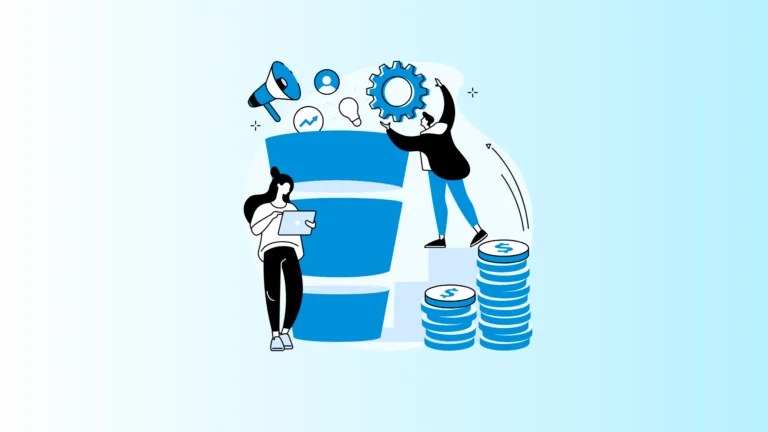
This is a sales funnel — the entire journey you took from “hmm, maybe it’s time to replace my phone?” to “placing my order.”
It’s called a “funnel” because at each step fewer people remain: thousands saw the ad, hundreds visited the website, dozens added the item to the cart, and only a few bought. Like a funnel: wide at the top, narrow at the bottom.
Why does this matter for your business?
Most entrepreneurs work blindly. They know they spent 50,000 UAH on ads and earned 100,000 UAH. But they don’t understand:
- Why do only 10 out of 1000 website visitors buy?
- At what moment did people change their minds?
- Which channels actually work and which ones simply waste budget?
- What exactly needs to change to sell more?
The sales funnel is like GPS for your business. It shows the exact customer route and points out where you went off track.
How does this work in real life?
Imagine you’ve created a SaaS project management tool. Here’s what your funnel looks like:
Step 1: A person Googles “task manager for team” and sees your ad (10,000 impressions per month)
Step 2: 500 of them click and visit your site; the rest weren’t interested in the headline or already have a solution
Step 3: 200 sign up for the free trial, and 300 viewed the homepage and closed the tab (maybe they didn’t understand the benefits in 5 seconds?)
Step 4: 80 actively use the service for the first 7 days, and 120 signed up but didn’t even create a first project (complicated onboarding?)
Step 5: 25 buy the paid subscription after the trial, and 55 used the service, liked it, but didn’t convert (maybe the price seemed high? Or they didn’t get a reminder in time?)
See the problem? You’re losing 120 people who didn’t even try the product after signing up. That’s a huge loss! Maybe you should add an interactive tutorial? Or send an email like: “Let’s create your first project in 2 minutes?”
And another 55 people actively used it but didn’t pay. Why? Maybe they didn’t have enough time to evaluate the full potential in a week? Or forgot the trial isn’t endless? Time to launch an email series with case studies and trial-end reminders.
Without a funnel, you wouldn’t know this. You would just think: “For some reason the conversion is low, we need to buy more ads.”
Key logic: people don’t buy instantly
Here’s what’s important to understand: the buying decision is a process, not a moment. Especially if you’re selling something more expensive than a chocolate bar.
A person needs time to:
- Realize the problem: “My laptop froze again during a presentation.”
- Start looking for solutions: “Maybe it’s time to buy a new one?”
- Explore options: “MacBook or ThinkPad? Or maybe a tablet?”
- Compare prices: “This store is 3000 cheaper.”
- Get convinced: “I need to look at reviews again.”
- Finally buy: “Okay, I’m getting it!”
Your task isn’t to push the person forward but to make each step as easy and logical as possible.
Why doesn’t everyone reach the finish line?
And that’s normal! Not everyone who sees your ad should become a customer.
There are plenty of valid reasons:
- A person is just collecting information for the future
- Your product doesn’t suit them (and that’s okay!)
- The budget doesn’t allow it
- Competitors offered something better
- The buying process was too complicated
The main goal of the funnel is not to lose those who really want to buy but something stops them. That’s where the real treasure lies.
The difference between “just selling” and a system
Traditional sales: found a client → offered → sold (or not). Does it work? Yes. Is it effective? Not really.
A sales funnel is:
- A clear system. You know exactly what happens at every stage.
- Automation instead of routine. Email sequences, chatbots, reminders — all working 24/7.
- Data instead of guesses. You clearly see: 30% leave after viewing prices. So the issue is either the price or how you present it.
- Scaling instead of exhaustion. You set the process once, and it works for hundreds of clients simultaneously.
This turns you from “a person trying to sell something” into a company with a clear client acquisition system.
How does this look in different businesses?
Online clothing store: a woman sees an Instagram post → goes to the site → adds a dress to favorites → receives an email with a 10% discount → returns and buys → gets invited to join the newsletter
Consulting company: a director Googles “how to increase sales” → reads your article → downloads a free checklist → subscribes to emails → sees a webinar invite → understands during the webinar that he needs help → books a consultation
Dentistry: a person feels pain → Googles “dentist near me” → checks reviews → calls and books an appointment → comes in → likes the experience → becomes a regular and recommends friends
See the pattern? There are stages everywhere. And at each one you can lose someone — or help them move forward.
Where to start right now?
You don’t need complicated schemes. Start simple:
- Take a sheet of paper and write: How do people find you? → What do they do next? → When do they decide to buy? → What happens after the purchase?
- Add numbers: From 1000 people who saw the ad → 100 visited the site → 30 viewed the product → 10 added to cart → 3 paid
- Find the biggest drop-off: Ah, of 30 people who viewed the product, only 10 added to cart. Why? Maybe not enough reviews? Or poor photos? Or the price isn’t visible right away?
- Fix one thing: Not everything at once. Add reviews and see what changes. Then go to the next step.
The most interesting part begins after the purchase
A person bought something from you. What next? If you just take the money and forget about them — you’re losing gold.
A modern funnel includes:
- Emails with tips on how to use the product better
- A request for feedback (people like when their opinion matters)
- Cross-sell product suggestions
- Discounts for returning customers
- Invitations to a VIP or loyalty program
Example: You bought an online marketing course. A week later you get an email: “How is it going? Here are 3 extra tips.” Another week passes: “By the way, we have a sales course — 20% off for you.”
Suddenly, you buy that one too. And then recommend it to friends. And now one client brought the company profit not from one course, but from three plus two more customers.
Tools: what you really need
- CRM — sounds scary, but it’s just a table where you see all clients and their stage.
- Google Analytics — free, shows what people do on your site. Where they get stuck, where they drop off.
- Email service — for automated messages like “You left something in your cart, here’s a 10% discount.”
- Website chat — people love quick replies. You can even set up a chatbot for common questions.
And if you want everything in one place?
That’s why we created NovaTalks — an omnichannel platform where all communication channels live in one interface. A client first wrote via messenger, then sent an email, and now is calling? You see the entire history in one window and don’t have to guess what was discussed earlier.
What does this give to the sales funnel?
- Chatbots 24/7: they answer basic questions even at night while you sleep. A client at the “interested” stage gets an instant reply and doesn’t go to competitors.
- Real-time analytics: you see how clients interact with your team — how many requests were handled, where the biggest queue is, what the service quality is. Not “it seems,” but actual numbers.
- Mass personalized email campaigns: you send 1000 emails, but each client receives a unique message with their name, interaction history, and relevant offer.
- One-click channel switching: uncomfortable in chat? The client taps a button and calls — without losing context.
What’s next?
Now you understand the basics. A sales funnel is a structured approach to how people make buying decisions.
If you want to dive deeper and learn about specific stages, which channels to use at each stage, how to analyze metrics and optimize the process — read our article.
In short
A sales funnel is your map of the customer journey from “who/what is this?” to “I’m buying!”
Why do you need it? To see where you lose people and fix it.
How to start? Outline a simple customer journey, add numbers, find the weak spot.
The biggest mistake? Thinking the funnel ends at payment. The most valuable customers are repeat customers.
Start small. Analyze what you have now. Improve one thing. Look at the result. Repeat.
When you clearly see what is happening, managing becomes much easier.
Good luck!