Every contact center eventually faces the same question: should you serve all customers by a single standard, or tailor your approach to each individual? Both options have their own logic. Standardization delivers speed and predictability, while personalization builds a deeper connection and stronger loyalty.
In this article, we break down the strengths and weaknesses of each approach, compare them in a clear table, and show how to combine both methods so your customer gets the best possible experience.
What Is Standardized Service
Standardized service is an approach where every customer receives support according to the same rules, scripts, and procedures. No matter who reaches out, the agent follows the same algorithm, and answers to common questions are prepared in advance.
This approach has clear advantages:
- Speed. Ready-made scripts and templates let requests be handled in a matter of minutes.
- Predictability. The customer gets an equally high-quality answer regardless of which agent handles the request.
- Easy scaling. New employees are easier to train, since they only need to master the standard scenarios.
- Quality control. When processes are unified, it is simpler to monitor compliance and maintain a consistent level of service.
At the same time, excessive standardization has a downside. Communication can feel templated, and a customer with a complex or non-standard request risks not getting the help they need, because their situation falls outside the script.
What Is Personalized Service
Personalized service is built around the individual customer: their request history, preferences, past purchases, and the context of the situation. Instead of a universal reply, the agent or AI assistant offers a solution that takes this specific person into account.
The core value of personalization is the feeling of being understood and valued. This directly affects satisfaction and builds long-term loyalty to the brand. We covered how personalization affects customer loyalty in a separate article.
At the same time, personalization requires more resources: quality data, configured analytics tools, and trained agents. Keeping the right balance matters too, since excessive attention to personal data can make a customer feel their space has been intruded upon.
Personalization vs Standardization: Comparison Table
To see the difference between the approaches at a glance, let’s compare them across key criteria.
| Criterion | Standardized service | Personalized service |
| Service speed | High | Medium |
| Scalability | Easy to scale | Requires resources |
| Loyalty level | Moderate | High |
| Implementation costs | Lower | Higher |
| Agent training complexity | Low | High |
| Emotional connection | Weaker | Stronger |
| Best suited for | Typical high-volume requests | Complex, individual situations |
When to Choose Standardization and When to Choose Personalization
There is no universal recipe – the choice depends on the type of requests and your business goals.
Standardization works best when:
- there are many requests and they are of the same type (order statuses, working hours, standard instructions);
- maximum response speed is required;
- the processes have clear rules where accuracy and consistency matter.
Personalization delivers the greatest effect when:
- the customer reaches out with a complex or non-standard question;
- the goal is retaining valuable customers or driving repeat sales;
- the situation is emotionally sensitive and calls for a careful approach.
The Hybrid Approach: How to Combine Both Methods
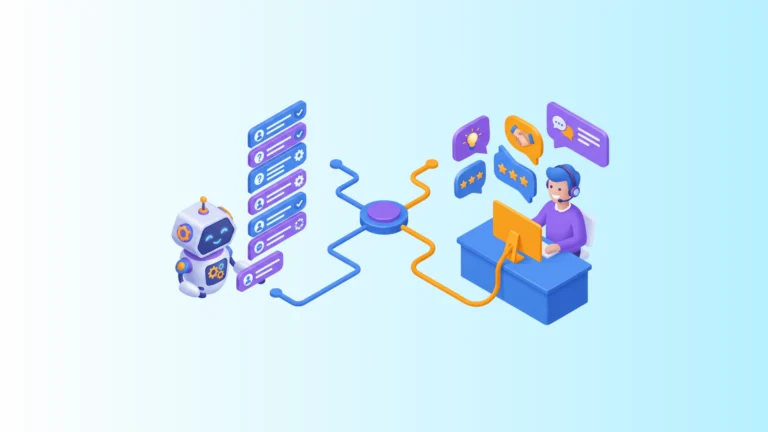
In practice, the strongest teams rarely stick to just one approach. The best results come from a combination: basic processes are standardized, while the moments that truly matter to the customer are personalized.
Here’s how it works:
- Automation handles the routine. Chatbots and ready-made scenarios instantly answer common questions around the clock.
- Complex requests move to an agent. When a question falls outside the script, the bot smoothly hands the conversation over to a live specialist.
- Data powers personalization. Request history, tags, and segmentation help the agent immediately understand the context and offer a relevant solution.
- AI strengthens both directions. It speeds up standard replies while helping adapt communication to each specific customer.
This balance lets you keep the speed of standardization while adding the warmth of personalized service.
How NovaTalks Helps You Combine Personalization and Standardization
NovaTalks is an omnichannel customer support platform that brings all communication channels together in a single interface: messengers, calls, online chat on your website, and email. Customers reach out in the way that suits them, while your business manages all communication from one window.
Here’s how the platform helps combine standardization and personalization:
- Chatbots for 24/7 support. With a simple builder, you set up a multilingual bot that answers common requests around the clock and reduces the load on agents, while handover logic ensures a smooth transition from bot to a live specialist.
- Personalized service based on data. Each customer’s request history is stored on the platform, and segmentation and tags help agents immediately account for context and offer individual solutions.
- Real-time AI tools. Error correction, translation into any language, changing the tone of a conversation, and instant dialogue summaries help agents work faster and better.
- Automatic quality assessment. AI analyzes every dialogue, whereas a manager can only cover a small share manually. This gives you the full picture of your service and immediately highlights conversations that need attention.
- Personalized mass campaigns. Filter your audience by tags and attributes, and send personalized offers, reminders, and news across messengers and social media.
- Analytics and insights. NovaTalks Insights turns customer requests into key insights using text and speech analytics, while a BI system with ready-made dashboards shows your contact center’s performance in real time.
Want to see it for yourself? Leave a request and get a 14-day free trial, or start a chat with us on your preferred channel.
Frequently Asked Questions
Which is better – personalization or standardized service?
There is no single best approach. Standardization ensures speed and predictability, while personalization brings loyalty and a deeper connection with the customer. For most businesses, the optimal solution is to combine both approaches depending on the type of request.
Can personalization and standardization be combined?
Yes, and this combination delivers the best results. Common requests can be automated with chatbots and scripts, while complex and sensitive situations can be routed to agents who work with the customer’s history and context in mind.
Which requests are suited to standardized service?
High-volume, same-type requests: checking order status, working hours, standard instructions, and answers to frequently asked questions. In these cases, speed matters more than deep personalization.
How can you personalize service without high costs?
Start with the basics: collecting request history, customer segmentation, and tags. An omnichannel platform like NovaTalks lets you automate data collection and apply personalization without significantly expanding your team.
Does standardization reduce customer loyalty?
Not on its own. Problems arise when a standard approach is applied even where the customer needs attention to their specific situation. That’s why standardization should be complemented with personalized elements.