When the number of customer inquiries increases, the speed of the first response determines how effectively the entire support team will operate. Even if your processes are well organized, a delay at the very beginning can ruin the service experience and complicate further work.
That’s why it’s worth considering an automated response bot. It can make the request-handling process more stable and predictable. Let’s take a closer look at how it works.
What an Automated Response Bot Does
Imagine a system that instantly responds to every customer inquiry, regardless of the time it arrives or how many requests are currently in the queue. That’s exactly what an automated response bot is.
Its main task is to register the inquiry, collect key information, and prepare everything so your team can start working on it as quickly as possible.
In practice, this delivers three important results:
- Customers don’t have to wait. The first response is sent instantly, even if all agents are busy.
- No inquiries are lost. Every request is automatically recorded in the system.
- Requests are already structured. Before an agent sees them, they’re organized by type, urgency, or other criteria.
This makes it possible to handle more inquiries and avoid chaos.
Why the First Response Matters
The first message sets the tone for the entire conversation. When customers immediately receive confirmation that their inquiry has been accepted and understand what will happen next, they feel calmer. As a result, they’re less likely to send follow-up messages like “Any updates?”
An automated response bot helps to:
- Create a sense that everything is under control
- Ensure a consistent, high-quality start, regardless of the channel the inquiry comes from
- Reduce the number of “empty” follow-up messages later on
This is especially noticeable when requests come in from multiple channels and at different times. For example, if you use Viber for lead generation, the speed of the first response directly affects whether a contact converts into a customer.
By the way, automating the first response is just one element of high-quality customer service. To build a truly effective support system, it’s important to consider all aspects of customer interaction—from team training to integrating all communication channels. We covered this comprehensive approach in one of our articles, where we outlined 10 key tips for delivering great customer service.
AI Chatbot vs. Corporate Bot: What’s the Difference?
These two types of bots work differently, but together they form a powerful system.
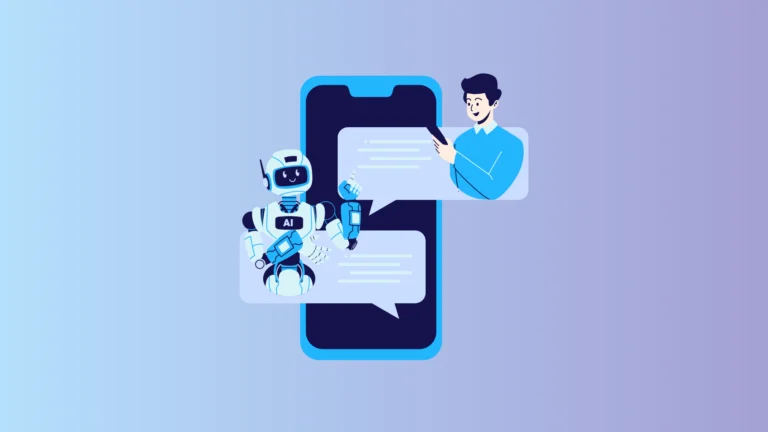
An AI chatbot is about understanding context. It can:
- Understand what the customer wants
- Ask clarifying questions
- Adapt the dialogue depending on the situation
A corporate bot is about process stability. It:
- Standardizes the start of every conversation
- Ensures no request falls out of the system
- Provides proper routing of inquiries to agents
On the NovaTalks platform, these components work as a single system rather than separate tools.
What Changes With a Bot: Four Key Metrics
To understand the real value of automation, let’s look at four critical metrics that directly affect customer support quality.
First Response Speed
Without automation: A customer may wait 5–10 minutes if agents are available. But if the inquiry comes in during the evening, on a weekend, or during a lunch break, the delay can easily stretch to an hour or more.
With an automated bot: The response is instant. It doesn’t matter what time the customer writes or how many people are contacting you simultaneously—the reaction is always fast.
Lost Inquiries
Without automation: During peak hours, some customers simply won’t get a response. Agents physically can’t handle all requests, and some inquiries fall through the cracks. This is especially painful when you lose a potential customer just because you didn’t respond in time.
With an automated bot: Every inquiry is automatically entered into the system and assigned a reference number. This means no request is lost, and its status can always be tracked.
Information Structure
Without automation: Customers reach out in different ways—some write briefly, others send long messages or voice notes. Agents first have to structure this information before they can actually solve the issue.
With an automated bot: Agents receive a structured request with all essential details—name, issue description, request category—so they can immediately move on to solving the problem without wasting time on basic clarifications.
Follow-up Messages
Without automation: When customers don’t get a quick response, they become anxious and start sending follow-up messages like “Any news?” This puts even more strain on the system and creates a vicious circle.
With an automated bot: Customers immediately see confirmation that their request has been accepted and are informed about the expected response time (for example, around one hour). When people understand what’s happening, they’re calmer and less likely to follow up unnecessarily.
The bot handles standard processes, while humans can focus on complex issues that require real expertise and a personal approach.
What Data the Bot Provides for Analysis
Beyond processing speed, the bot creates a valuable analytics foundation. You can see:
- Which types of inquiries are most common
- When activity peaks occur
- How often customers send follow-up messages
- How effective request routing is
This data allows you to move from chaotic request handling to systematic process management. NovaTalks brings all this information together into a single, easy-to-analyze overview.
Interesting Facts About Automation
- Companies with automated first responses see a noticeable reduction in repeat inquiries about the same issue.
- Customers most often evaluate service based on the speed of the first response.
- When the start of communication is standardized, agents make fewer routing mistakes.
- Even the simplest response bot makes the process clearer for customers.
- Automation has the biggest impact outside business hours—during evenings, nights, and weekends.
Common Mistakes to Avoid
When implementing bots, companies often make a few common mistakes:
- Asking too many questions at the start. Customers want to quickly describe their problem, not answer a dozen questions.
- Not handing the request off to anyone. The bot collects information, and then everything stops. There must be clear logic for what happens next.
- Not using the data. The bot collects information, but no one reviews or analyzes it.
- Trying to automate everything at once. It’s better to start small and improve gradually.
The right approach is phased implementation with regular analysis of how the bot performs.
Frequently Asked Questions
Is a bot suitable for complex requests?
Yes, if its role is clearly defined. The bot shouldn’t solve complex issues—it should register the request and collect context. The request is then passed to a specialist who already has all the necessary information.
Will a bot harm the customer experience?
It depends on the setup. If the bot responds instantly, provides clear information, and doesn’t create unnecessary obstacles, customers perceive it positively. If it asks too many questions and provides no answers, the effect will be the opposite.
What is the main advantage of an AI chatbot?
Its ability to adapt. An AI chatbot understands the context of the inquiry and can create a structured request that contains all the important information for further work.
Can a bot be used only in certain channels?
Yes, but the best results are achieved when the response logic is the same across all channels. This gives customers a predictable experience, regardless of where they contact you.
How can you tell if a bot is effective?
Look at several metrics: consistent first response time, fewer lost inquiries, and a reduction in follow-up messages.
Does a bot need regular updates?
Yes. It’s important to periodically review conversations, analyze statistics, and adjust scenarios to keep them relevant.
An automated response bot helps make the request-handling process stable and predictable. It ensures a controlled start to every conversation, collects data for analysis, and reduces chaos in request processing. The NovaTalks approach allows this automation to be integrated into a unified communication system while maintaining flexibility and service quality.
The result: your team works more efficiently, customers receive faster responses, and you have a clear understanding of what’s happening with every single request.