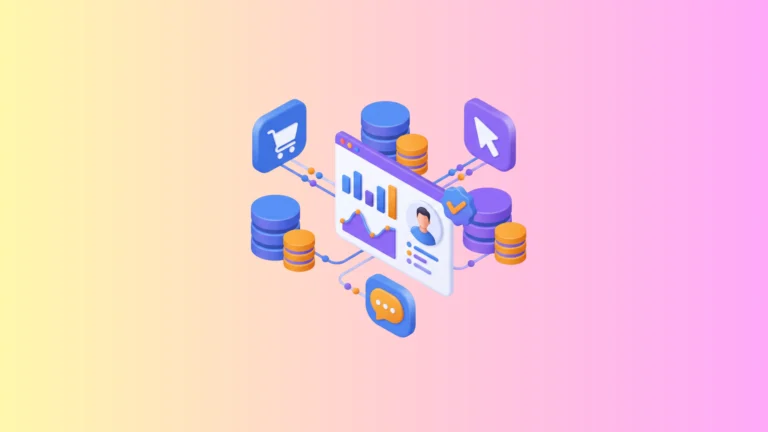
Just ten years ago, marketers relied mainly on intuition, focus groups, and a generalized profile of the “average buyer.” Today, everything is different: every click, page view, item added to a cart, and even a few seconds of hesitation before payment leaves a digital trace. Collected at the scale of millions of people, these traces form Big Data — large volumes of data that transform marketing from the art of guesswork into a precise discipline based on real customer behavior.
In this article, we will explain what big data is in simple terms, where businesses get it from, what types of analytics exist, and most importantly, how data helps companies gain a deeper understanding of their customers: their needs, motivations, and next step.
What Is Big Data in Simple Terms?
Big Data refers to datasets that are so large in volume, high in speed, and diverse in format that traditional tools such as spreadsheets can no longer process them effectively.
In marketing, this means a simple but powerful shift: instead of analyzing the behavior of a single customer, you analyze the behavior of your entire audience at once — and identify clear patterns in that flow of data that would be almost impossible to notice “by eye.”
Big Data is traditionally described through the concept of the 5Vs — five key characteristics.
| Characteristic | What It Means | Example in Marketing |
|---|---|---|
| Volume | Huge amounts of information generated by users every day | Millions of transactions, views, and clicks in an online store |
| Velocity | Data is generated and needs to be processed almost in real time | Updating recommendations immediately after a user views a product |
| Variety | Structured and unstructured data from multiple sources | Review texts, videos, likes, purchase history, geolocation |
| Veracity | The quality and reliability of data, including filtering out “noise” | Removing duplicates, bots, and incorrect records from a CRM system |
| Value | The real benefit that data brings to a business | Increased conversion rates thanks to more accurate offers |
The main idea is simple: value does not come from merely collecting data, but from the ability to turn it into decisions.
Terabytes of information without analysis are just storage costs. That is why the final criterion, Value, is the most important one.
If you are just starting to explore this topic, we recommend first reading a broader overview of what Big Data analytics is and how it is used. In that article, we explain the basics of big data, call analytics, and practical areas of application.
Why Data Has Become the Main Currency of Marketing
The amount of information users generate every day is growing at an exponential rate: every interaction with a brand creates new data. In this environment, competition is shifting from who has more data to who can understand it better and turn it into decisions faster.
That is why working with data is no longer the exclusive domain of large corporations — it has become a fundamental marketing skill. Companies that systematically analyze customer behavior can address customer needs more accurately, spend their advertising budgets more efficiently, and build stronger relationships with their audiences. This is the practical answer to why businesses should invest in data in the first place.
Where Businesses Get Customer Data From
Before data can be analyzed, it needs to be collected. There are far more sources than it may seem, and each one adds a separate detail to the customer profile.
Based on origin, data is usually divided into three types:
- First-party data — information you collect directly: website behavior, purchase history, and CRM data. This is the most valuable and reliable asset because it fully belongs to you.
- Second-party data — someone else’s first-party data shared with you by trusted partners under an agreement.
- Third-party data — aggregated data from external providers. Its role is gradually decreasing due to stricter privacy requirements and browsers phasing out third-party cookies.
By content, data sources can be grouped as follows:
| Data Type | Where It Comes From | What It Reveals About the Customer |
|---|---|---|
| Behavioral data | Website, app, email, advertising | What a person is interested in, how they search, and how they make choices |
| Transactional data | Purchases, orders, returns | What, when, and how often a customer buys, as well as their average order value |
| Demographic data | Registrations, forms, profiles | Age, city, gender, language, and basic interests |
| Contextual data | Device, time, geolocation | The situation in which the customer makes a decision |
| Feedback | Reviews, surveys, customer support | What customers like and what frustrates them |
One important principle deserves special attention: fragmented data from different systems provides limited value. The real power emerges when behavioral, transactional, and demographic data are combined into a single customer profile — which we will discuss later.
Types of Analytics: How to Turn Data Into Decisions
Data does not solve anything on its own — what matters is the questions you ask it. In marketing analytics, there are four levels of maturity that gradually become more advanced: from simply describing the past to providing specific recommendations for the future.
| Type of Analytics | Question It Answers | What It Gives Marketers |
|---|---|---|
| Descriptive analytics | What happened? | Reports on traffic, sales, and behavior over a specific period |
| Diagnostic analytics | Why did it happen? | The reasons behind an increase or decrease in conversion |
| Predictive analytics | What will happen next? | Forecasts of demand, churn risk, or the next purchase |
| Prescriptive analytics | What should be done? | Recommendations for actions: pricing, channel, or offer |
The logic is simple: descriptive and diagnostic analytics answer questions about the past — what happened and why — while predictive and prescriptive analytics focus on the future — what is likely to happen and what should be done about it.
The higher the level of analytics, the greater the competitive advantage it can provide. At the same time, it requires more advanced tools and higher-quality data.
How Big Data Helps Businesses Understand Customers
Now let’s get to the main point. Here are the specific ways in which big data turns an abstract “audience” into understandable people with predictable needs.
Audience Segmentation
Instead of relying on a single averaged “buyer persona,” data makes it possible to divide the audience into dozens of precise micro-segments — based on behavior, value, lifecycle stage, or readiness to buy.
For example, algorithms can automatically identify a group of customers who regularly view a product but do not buy it because of the price. This exact group can then be shown a personalized discount.
This type of segmentation is dynamic: customers automatically move between groups as their behavior changes.
Experience Personalization
Personalization is probably the most noticeable result of working with data. Based on browsing and purchase history, a system can generate individual recommendations, select relevant email campaigns, change homepage content, and show the exact offer that is most likely to interest a specific person.
A classic example is recommendation feeds used by large marketplaces and streaming services, where a significant share of views and purchases comes from personalized suggestions.
Predicting Behavior and Needs
This is the shift from asking “What did the customer do?” to “What will the customer do next?”
Predictive analytics uses historical patterns to forecast the likelihood of the next purchase, the best time to contact a customer, their interest in a specific product category, and even their expected order value.
Thanks to this, marketers can act proactively: offering a product before the customer has even started actively searching for it.
A Unified Customer Profile: Customer 360
The same user may visit a website from a phone, open an email on a laptop, and make a purchase in an app. Without unified data, this can look like three different people.
Big Data technologies bring all interactions together into a single end-to-end profile — the so-called Customer 360 model.
As a result, a business can see the complete customer journey: from the first interaction with the brand to repeat purchases. This allows communication to remain consistent across all channels.
Churn Prediction and Customer Retention
Retaining an existing customer is almost always cheaper than acquiring a new one. Data makes it possible to detect early signs that a person is losing interest in a brand: fewer visits, decreased activity, or ignored email campaigns.
Once such a signal is detected, the system can automatically launch a reactivation scenario — a personalized offer, reminder, or bonus.
This is churn analysis, one of the most profitable areas of working with data.
Tools and Technologies for Working With Data
A whole ecosystem of solutions helps businesses work with big data. There is no need to implement everything at once — the key is to understand what each tool is responsible for.
- CRM systems store the history of interactions with each customer and serve as the foundation for most marketing data.
- CDPs — Customer Data Platforms combine data from different sources into a single customer profile, the same Customer 360 model.
- Web analytics tools, such as GA4, track user behavior on websites and in apps.
- BI platforms, such as Power BI, Tableau, and Looker, visualize data in clear dashboards and reports.
- Machine learning tools build predictive models, from segmentation to churn prediction.
- Marketing automation systems help collect data correctly and launch personalized scenarios.
The key rule is simple: first define the business goal, and only then choose the technology that fits it — not the other way around.
NovaTalks: Big Data in Customer Support in Action
All these categories of tools can be clearly seen through the example of a single platform. The omnichannel platform NovaTalks brings customer communication from different channels together within one interface and turns every request into data that can be analyzed and used.
Customer support is one of the richest sources of information about what customers truly think and need.
| Channel | When It Is Most Useful |
|---|---|
| Messengers | Fast and convenient requests, including from abroad, with no cost for the customer |
| Calls | Situations where messaging is inconvenient or the issue needs to be discussed quickly |
| Online chat | Instant communication on the website and real-time support |
| Formal requests, sending documents, and receiving proposals |
All Channels — One Customer Profile
Messengers, calls, online chat, and email all work within a single system, so customer data and interaction history are stored centrally in one place.
This is what a complete customer profile looks like in practice: an agent sees the full communication context regardless of which channel the request came from.
To make service more personal, requests can be segmented and tagged, then routed to the right specialists or used to adapt communication for a specific customer group.
NovaTalks Insights: When Conversations Become Data
Most information in customer support is unstructured: live conversations are difficult to fit into ready-made tables.
This is where text and speech analytics come into play. NovaTalks Insights automatically processes requests and metadata, extracts the most important information, and turns terabytes of conversations into concrete insights.
This is a clear example of big data in action: the platform identifies processes within large volumes of communication that need improvement and suggests exactly what should be optimized.
Real-Time BI Reporting
The built-in BI system with ready-made dashboards shows contact center performance in real time: agent productivity, service quality measured by CSAT, and other metrics.
Reports can be customized to match business needs — users can select the necessary metrics and group them by convenient time intervals.
AI Tools and Automation
Artificial intelligence helps agents directly during conversations: it corrects mistakes, translates messages, changes the tone of communication, or prepares a summary of the conversation.
Automatic quality assessment works separately. It analyzes compliance with scripts and overall performance. It covers every conversation, while a human specialist can manually review only a small sample. As a result, it provides a more complete and objective picture.
Multilingual chatbots handle typical requests around the clock and, when needed, smoothly transfer the conversation to a live agent.
If you want to bring all customer communication channels together in one place and start turning customer requests into useful data, the NovaTalks platform provides a ready-made toolkit for doing so.
Ethics, Privacy, and Data Protection
Working with data means taking responsibility. Users are becoming increasingly attentive to how companies use their information, while legislation — including the European GDPR regulation — sets clear rules for the game.
Here are several principles that turn working with data from a risk into an advantage:
- Transparency and consent. Collect data openly and only with the user’s consent, clearly explaining why it is needed.
- Minimization. Do not collect everything indiscriminately — gather only the data that truly serves a specific purpose.
- Security. Protect information from leaks through encryption, access control, and regular audits.
- Anonymization. Where possible, work with aggregated and anonymized data instead of personal data.
- Focus on first-party data. As third-party cookies are phased out, your own ethically collected data becomes the main and most reliable asset.
The paradox is that respect for privacy ultimately benefits the business: it strengthens trust, and trust is what encourages customers to share their data voluntarily.
Common Mistakes When Working With Big Data
- Collecting data for the sake of collecting data. Terabytes of information without a goal or analysis turn into costs, not an asset.
- Ignoring data quality. Duplicates, outdated records, and errors lead to false conclusions. The principle of “garbage in, garbage out” works without fail.
- Analysis without hypotheses. Data should be explored based on specific business questions, not by “digging” at random.
- A gap between analytics and action. Even the most accurate insight is useless if it does not lead to a specific change in a campaign or product.
- Neglecting privacy. Cutting corners on data protection and transparency sooner or later results in lost trust and legal risks.
The Future of Big Data in Marketing: Key Trends
The direction is clear: there will be more data, and the tools for making sense of it will become more accessible.
Here are the trends that will shape the coming years.
Artificial Intelligence and Machine Learning
AI takes over routine analysis and makes it possible to process volumes of data that humans cannot handle manually — from automatic segmentation to generating personalized offers.
Real-Time Analytics
Decisions are made not “at the end of the month,” but at the exact moment of interaction with the customer.
A Privacy-First Approach
The future belongs to first-party data and technologies that respect user privacy by default.
Predictive Personalization
Systems do not simply respond to customer actions — they anticipate customer needs and act proactively.
Democratization of Analytics
Thanks to intuitive interfaces and AI assistants, working with data will no longer be limited to analysts. Every marketer will be able to use it.
Frequently Asked Questions
What is Big Data in marketing in simple terms?
It is large volumes of data about customer behavior — clicks, purchases, views, reviews — that businesses analyze to better understand their audience and make more accurate decisions, from advertising to product assortment.
How is Big Data different from regular analytics?
Regular analytics usually works with limited structured data and answers the question “What happened?”
Big Data covers huge volumes of diverse information in real time and makes it possible to predict behavior and personalize experiences at scale.
What customer data can be collected legally?
Data that the user has consented to share and that is collected transparently for a specific purpose.
The key rule is minimization: collect only what is necessary and comply with GDPR requirements. The safest asset is first-party data.
How does Big Data help increase sales?
It helps through more accurate segmentation, personalized recommendations, demand forecasting, and timely customer retention.
All of this makes offers more relevant, which increases conversion rates and average order value.
Will artificial intelligence replace the marketing analyst?
It is more likely to enhance the analyst’s role than replace it.
AI takes over data processing and pattern detection, but asking the right questions, interpreting results, and making strategic decisions remain human responsibilities.
Conclusion
Big Data changes the very essence of marketing. Instead of guessing what customers want, businesses gain the ability to know it — and act proactively.
Data helps companies see their audience not as a faceless mass, but as specific people with their own habits, needs, and expectations.
However, technology and volume are only half the story. The advantage does not go to the company that collects the most data, but to the one that asks the right questions, respects user privacy, and turns insights into concrete actions.
It is at this intersection of analytics, ethics, and common sense that a truly deep understanding of the customer is born.